
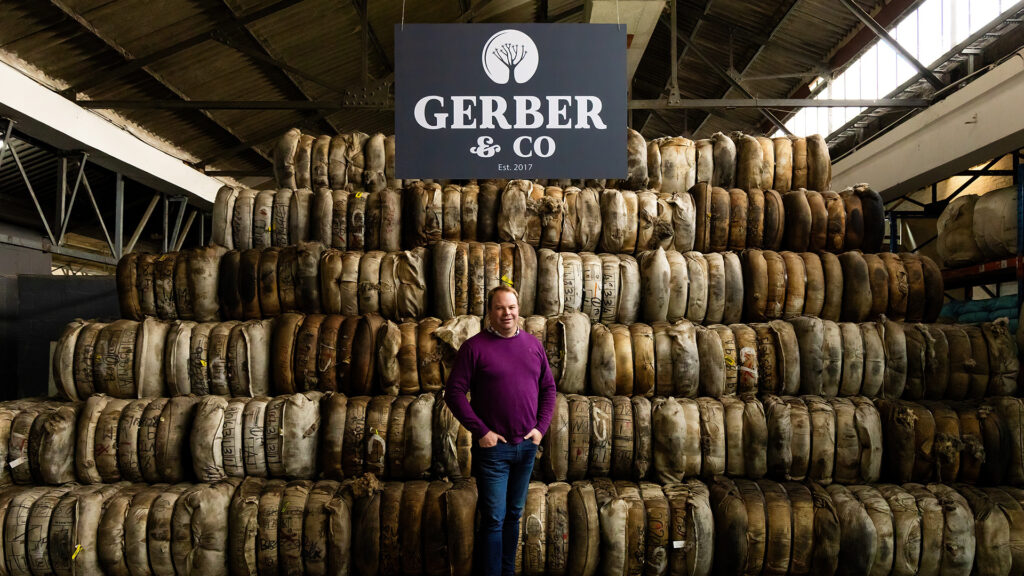
As a new SAFI Associate Member, Gerber & Co forms part of a network of suppliers and manufacturers working collectively to strengthen South Africa’s furniture and interiors industry. While furniture manufacturers are often the most visible part of the sector, upstream partners such as Gerber & Co play a vital role in ensuring that locally produced materials meet the performance and quality demands of modern manufacturing.
For Ryan Weideman, Sales & Marketing Manager at Gerber & Co, SAFI membership reflects a commitment to collaboration across the value chain. “Being part of SAFI connects us directly with manufacturers and stakeholders who share the goal of building a stronger local manufacturing ecosystem,” he says.
From raw wool to usable fibre
“Wool scouring is the foundational transformation step that converts raw, greasy wool into a clean, usable fibre. Freshly shorn wool contains lanolin, dust and vegetable matter that must be removed before processing can begin,” Weideman explains. Scouring stabilises the fibre and unlocks the qualities that make wool suitable for textile and upholstery applications. “Without effective scouring, the rest of the value chain simply cannot function at scale,” he says.
Gerber & Co currently operates South Africa’s only industrial-scale wool scouring facility. “Local processing allows value to remain in South Africa instead of exporting raw material and importing finished products back at a premium,” Weideman notes.
Why localisation matters to manufacturers
For furniture manufacturers, local processing delivers practical advantages, says Weideman: “Local scouring shortens lead times, improves supply-chain resilience and allows closer collaboration between processor, textile manufacturer and furniture maker. Faster development cycles, customised solutions and stronger quality control become possible within a local ecosystem. Reduced transport distances also support sustainability goals while strengthening local sourcing credentials.”
Designing textiles for performance
Alongside fibre processing, Gerber & Co produces upholstery textiles engineered for demanding interiors. “Our fabrics are developed with performance-first thinking,” says Weideman. “Wool’s natural durability, resilience, temperature regulation and fire resistance make it particularly suited to residential and contract environments.”
Textiles are tested for abrasion resistance, colourfastness, pilling and dimensional stability to ensure long-term performance. “The aim is relevance without compromise,” he adds. “Fabrics should feel contemporary, but still be aesthetically relevant, and able to perform years down the line.”
Stronger through SAFI collaboration
For Gerber & Co, SAFI membership provides tangible strategic value, notes Weideman: “SAFI connects the entire furniture and interiors value chain. Membership has strengthened visibility while enabling direct engagement with manufacturers, designers and specifiers focused on local sourcing.”
In a sector facing cost pressures and imported competition, SAFI creates opportunities for collaboration, shared insight and industry advocacy. “It helps position local manufacturers and suppliers as relevant and competitive,” he says.
Building industry alignment
Weideman strongly recommends SAFI membership across the supply chain: “SAFI membership is not just about exposure, it’s about alignment. It brings together businesses committed to growing the local industry.”
For furniture manufacturers, working within this network strengthens collaboration and supports sustainable industry development. “A strong furniture sector depends on strong partnerships,” Weideman concludes. “SAFI creates the space where those partnerships can grow.”


