South Africa’s furniture manufacturing industry depends on a steady pipeline of skilled people. At the same time, communities across the country need practical opportunities that can lead to employment, entrepreneurship and economic growth. A recent initiative by Denic Cabinets, in partnership with Sibanye Stillwater, demonstrates how industry can help address both challenges.
According to Lynn Adonis, SAFI’s Administrator and Qualifications Manager, skills development remains one of the most powerful tools for building both businesses and communities: “Skills development is not only about training people for jobs, it is about creating opportunities, building confidence and giving individuals practical capabilities that can support them throughout their careers.”
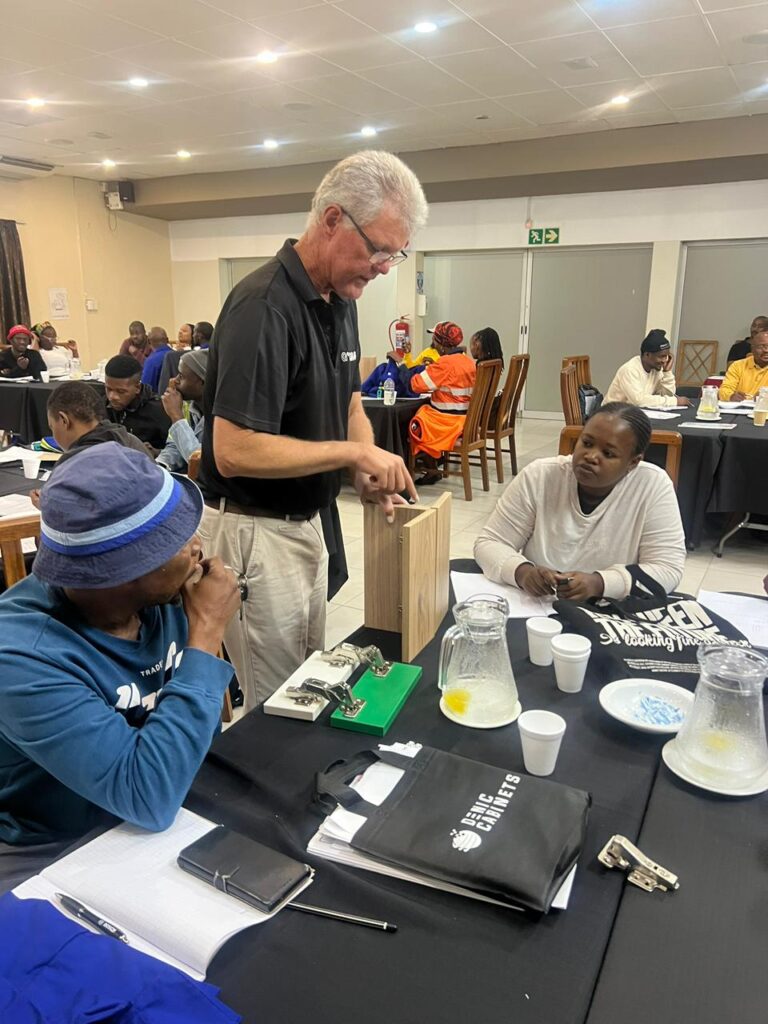
Led by CEO, Dipuo Phakathi, Denic Cabinets was awarded a contract to upskill 60 SMMEs from local communities through an accredited Cabinet Making Skills Programme. Running from April to June 2026, the programme combines classroom learning with practical, hands-on training in cabinet making, woodworking, materials and craftsmanship.
For many participants, it is their first exposure to the furniture manufacturing sector.
“What makes programmes like this so valuable is that they introduce people to skills they can use in a variety of ways,” says Adonis. “Whether they pursue employment, start their own businesses or apply these skills in their communities, they leave with knowledge that can create real opportunities.”
A key strength of the programme is its collaborative approach. Board and hardware suppliers have been directly involved in the training process, giving learners exposure to industry products, materials and best practices. This practical experience helps participants better understand how the industry operates and prepares them for real workplace environments.
“The most effective learning happens when theory and practical experience come together,” explains Adonis. “Exposure to real products, suppliers and industry processes gives learners a much stronger foundation for future success.”
The initiative also highlights the growing contribution of women leaders in manufacturing. Under Phakathi’s leadership, Denic Cabinets is helping create a more inclusive and accessible industry while investing in the next generation of skilled artisans and entrepreneurs.
“South Africa needs more programmes that combine skills development with genuine empowerment,” says Adonis. “When businesses invest in people, the impact extends far beyond the workplace. It strengthens communities, creates opportunities and helps secure the future of our industry.”
For SAFI, initiatives such as this demonstrate how industry partnerships can play a meaningful role in building skills, supporting economic development and creating lasting change.