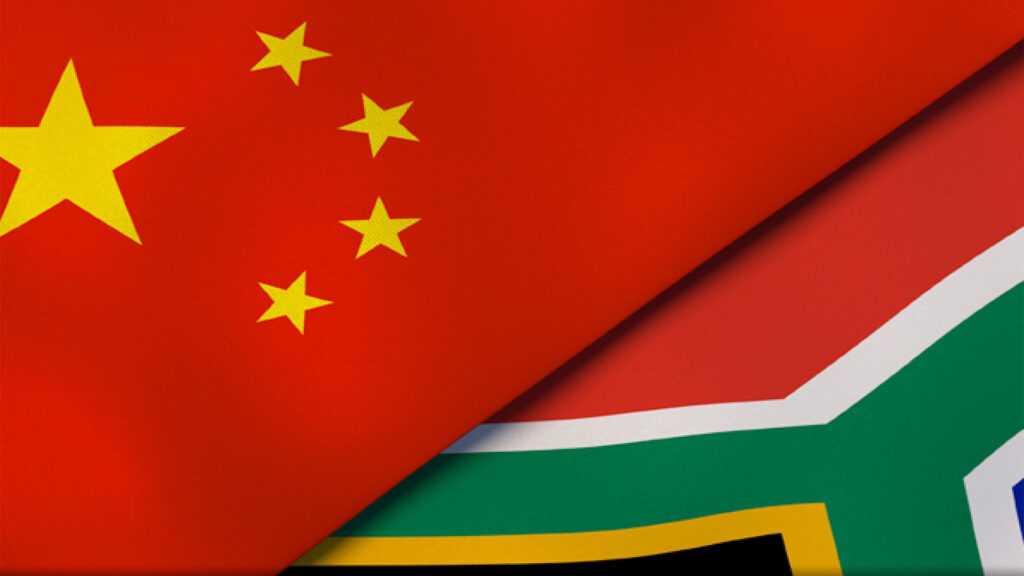
Trade agreements are often viewed through the lens of new export opportunities and stronger international relationships. However, for South Africa’s furniture manufacturing sector, elements of the proposed China-Africa Economic Partnership Agreement (CAEPA) have raised significant concerns about the potential impact on local industry competitiveness.
The draft Early Harvest Agreement currently under discussion proposes reducing import duties to zero on selected products imported from China. While increased trade can offer economic benefits, SAFI has cautioned that some of the proposals could unintentionally expose local manufacturers and raw material suppliers to increased pressure from heavily subsidised imports.
“Trade liberalisation must be approached carefully and strategically,” says Greg Boulle, SAFI’s CEO. “South Africa’s furniture manufacturers operate in a highly competitive environment. Any tariff changes need to take account of existing trade imbalances and the realities facing domestic producers.”
SAFI has also called for the proactive designation of all relevant furniture tariff lines under HS 9401, HS 9403 and HS 9404 as sensitive products. The organisation argues that even where furniture categories are not currently included in the draft agreement, failing to identify them as sensitive now could leave the sector vulnerable during future phases of negotiation.
“Trade agreements often evolve over time,” says Boulle. “The industry cannot afford to wait until products are added to future negotiation rounds before raising concerns. We need to ensure appropriate protections are considered from the outset.”
Perhaps most concerning is a classification error identified within the draft tariff offer. SAFI noted that references to a highly specific tariff line relating to wooden parts used in aircraft seating were accompanied by descriptions that could be interpreted as applying to the entire furniture seating category. If left uncorrected, the wording could inadvertently liberalise the whole seating chapter under HS 9401, creating potentially severe consequences for domestic furniture manufacturers.
“This is not simply a technical detail,” says Boulle. “Classification accuracy is critical. A seemingly minor error can have major consequences if it creates uncertainty or unintentionally opens the market to products that were never intended to be covered.”
SAFI has also highlighted persistent trade asymmetries between South Africa and China, noting that state-supported industrial policies and coordinated support systems continue to influence global competitiveness.
“We support trade that is fair, balanced and mutually beneficial,” concludes Boulle. “But fairness requires recognising the structural advantages that exist in some international markets. South African manufacturers must be given a reasonable opportunity to compete, invest and grow.”
As negotiations continue, SAFI remains actively engaged with government, industry stakeholders and Business Unity South Africa to ensure that the interests of local manufacturers are fully considered before any final agreement is concluded.