South Africa’s furniture manufacturers have the design capability and production strength to compete globally. Yet participation in export missions and funding programmes continues to be limited by one critical factor: readiness.
“Export promotion only works when exporters are properly prepared,” says Tracy Symons, Marketing Relationship Manager at SAFI. “We are seeing strong interest in new markets, but interest alone is not enough. Compliance, documentation and structure determine who can actually participate.”
EUDR compliance
A clear example is the European Union Deforestation Regulation (EUDR) compliance pilot being coordinated by SAFI, in partnership with EcoSquare Consulting. Launched in late 2025, the pilot works directly with selected SAFI member manufacturers to test what practical compliance under EUDR requires.
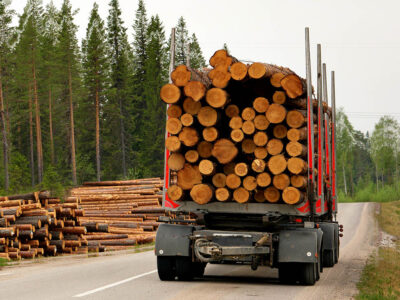
It involves mapping supply chains from forest or plantation level through sawmills and component suppliers to the final furniture manufacturer, verifying geolocation data for timber origin and reviewing legal harvest documentation.
“The EUDR compliance pilot has shown us how detailed the process needs to be,” Symons explains. “We are reviewing Bills of Materials, identifying wood, leather, paper and rubber inputs and checking whether we can trace them back to source with documented proof.”
Working sessions have also exposed wider risks under Registration, Evaluation, Authorisation and Restriction of Chemicals (REACH) regulations. Adhesives, paints and laminating systems commonly used in local production may contain restricted substances. “Supplier assurances are not enough,” says Symons. “Manufacturers need formal Statements of Compliance and properly completed Safety Data Sheets. Without documented proof, exports are at risk.”
In some cases, reformulation or process changes may be required. “Compliance is not paperwork,” she adds. “It can have enormous impacts on a wide variety of things including factory layout, drying times and cost structures.”
Certification and market entry
Beyond Europe, readiness remains essential. Feedback from the Index Saudi Arabia trade show attended in 2025 confirmed that certification such as SALEEM for example, Saudi Arabia’s national product safety certification system, must be prepared well in advance of attendance. “We cannot partake in a trade show where we hope to enter a market, and only then start investigating certification,” Symons notes. “Preparation must happen months before a show.”
Exporter registration is another basic, but critical requirement. Manufacturers must hold a valid export licence through SARS eFiling under the Registration, Licensing and Accreditation system before trading internationally. “This is a simple step, but if it is not done, funding applications and participation are delayed,” says Symons.
Funding and documentation gaps
B-BBEE compliance directly affects eligibility for SSAS and EMIA funding through the dtic. Where documentation is incomplete or levels are not addressed, manufacturers risk exclusion from public support mechanisms.
Both funding streams require thorough preparation. Applications must include valid tax clearance pin, confirmed bank details, detailed project plans and realistic costing that reflects freight and certification requirements. “Incomplete documentation delays approvals and increases risk,” says Symons. “International exhibitions operate on fixed timelines. If applications are submitted late, opportunities can be lost.”
Finalising the fundamentals
“Export readiness is about discipline,” says Symons. “When the fundamentals are in place, participation becomes viable and opportunities can convert into real business.”
What must be finalised immediately is clear. Exporter registration. Verified B-BBEE documentation. Supplier compliance declarations. Structured costing. Defined buyer follow-up plans.
The pathway to global markets is open. The responsibility now falls onto the manufacturers to ensure that they are fully prepared to compete.