For decades, South African furniture manufacturers have faced a familiar list of challenges: cheap imports, rising input costs, infrastructure constraints, skills shortages and shifting consumer demand. Yet, despite these pressures, some manufacturers continue to grow, invest and find new opportunities.
According to Jacques Louwrens, Director of Etvaal Furniture Manufacturers, the difference often comes down to one thing: adaptability: “People quote Darwin saying that it is the strongest that survive, the fittest. But that is not what he said: he said it is those who are the most flexible, those who can adapt to change, who survive.”
It is a philosophy that has helped guide Etvaal’s journey from a small pine furniture manufacturer founded more than 55 years ago near Bronkhorstspruit, to a business employing over 250 people and producing more than 400 furniture products for South African and African markets. But Louwrens believes the lesson applies equally to the broader industry.
A changing manufacturing landscape
South Africa’s furniture sector is operating in an increasingly complex environment. Manufacturers must compete against low-cost imports while managing rising energy, transport and production costs. At the same time, customer expectations are evolving rapidly.
Yet Louwrens believes manufacturers who focus only on the challenges may be missing the bigger picture: “One of the biggest opportunities is the growing awareness around supporting local manufacturing and building stronger local supply chains. Consumers and retailers are increasingly recognising the value of locally produced products, particularly where quality, service and reliability are important.”
This growing appreciation for local manufacturing is creating opportunities for businesses that can offer flexibility, shorter lead times and products tailored to local consumer preferences. Increasingly, these are advantages that imported products struggle to match.
Export markets are changing the game
One of the strongest themes emerging across the global furniture industry is the growing importance of compliance, traceability and sustainability. As a participant in SAFI’s EUDR pilot programme, Etvaal has been directly involved in exploring what future export requirements may look like.
“The EUDR pilot programme has highlighted just how important traceability, compliance and supply chain transparency are becoming within global trade,” says Louwrens.
The message for manufacturers is clear. Export readiness is no longer simply about having a good product and finding a buyer. International markets increasingly expect documented proof of material origins, responsible sourcing and compliance with environmental standards.
Louwrens believes South African manufacturers should see this shift as an opportunity rather than a threat: “If we position ourselves correctly, compliance and sustainability could become competitive advantages rather than barriers.”
For manufacturers considering export markets, preparation needs to begin long before the first order arrives. Consistency, quality control, logistics planning, supplier management and documentation are becoming essential parts of doing business internationally.
Learning from the world
SAFI’s recent introductions to international specialists such as Jörn Brenscheidt from Hokon in Germany, and furniture industry expert, Mark McCann from the United Kingdom have also highlighted the value of global collaboration, notes Louwrens: “International relationships are extremely valuable because they expose local manufacturers to global trends, technologies, standards and market expectations.”
These engagements are helping South African manufacturers better understand emerging export opportunities, evolving customer expectations and the standards that will shape future competitiveness. Just as importantly, they are helping local businesses identify the unique strengths that differentiate South African manufacturers from competitors elsewhere in the world.
The future factory
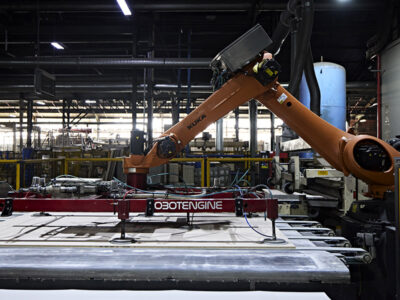
Technology, automation and digital manufacturing are expected to reshape furniture production over the next decade. But Louwrens cautions that automation should not be viewed simply as replacing people: “Automation does not necessarily mean replacing people. It means improving productivity, consistency and competitiveness.”
Future-ready manufacturers will need to combine technology investments with skills development, workforce training and stronger partnerships with educational institutions. Traditional craftsmanship will remain important, but manufacturers will increasingly require employees who can operate advanced equipment, interpret production data and work within modern manufacturing systems.
Stronger together
For Louwrens, the future success of South African furniture manufacturing will depend on collaboration as much as competition: “The industry is stronger when manufacturers work together on common priorities such as skills development, localisation, export readiness, sustainability and policy engagement.”
His vision for the next decade is one of greater localisation, increased export participation, stronger skills development and wider adoption of technology and sustainability practices.
The challenges facing the sector are real. But so are the opportunities. For manufacturers willing to embrace change, invest in capability and work together strategically, the future remains full of potential. As global markets evolve and consumer expectations shift, one thing appears increasingly certain: adaptability will be the defining characteristic of tomorrow’s successful furniture manufacturers.
ENDS